
The Nail Ritual
Once a year at Volsinii, a nail was driven into a temple wall to mark another year. The clavus annalis — the oldest known practice of marking time on a wall.
Once a year in the Etruscan city of Volsinii, a nail was driven into the wall of a temple. The temple belonged to the goddess Nortia — Nurtia in the Etruscan language — and the nail marked the passing of another year. One nail per year, hammered into stone or timber, accumulating over decades and centuries into a physical record of time on a wall.
The practice was called the clavus annalis — the annual nail. It is the oldest known ritual of marking time on a vertical surface.
What the sources say
Almost everything we know about the ritual comes from a single passage by the Roman historian Livy, writing in the first century BCE. He attributes the information to Cincius, an earlier antiquarian researcher:
"Cincius confirms that at Volsinii nails are in evidence at the temple of the Etruscan goddess Nortia, fixed to mark the number of years."
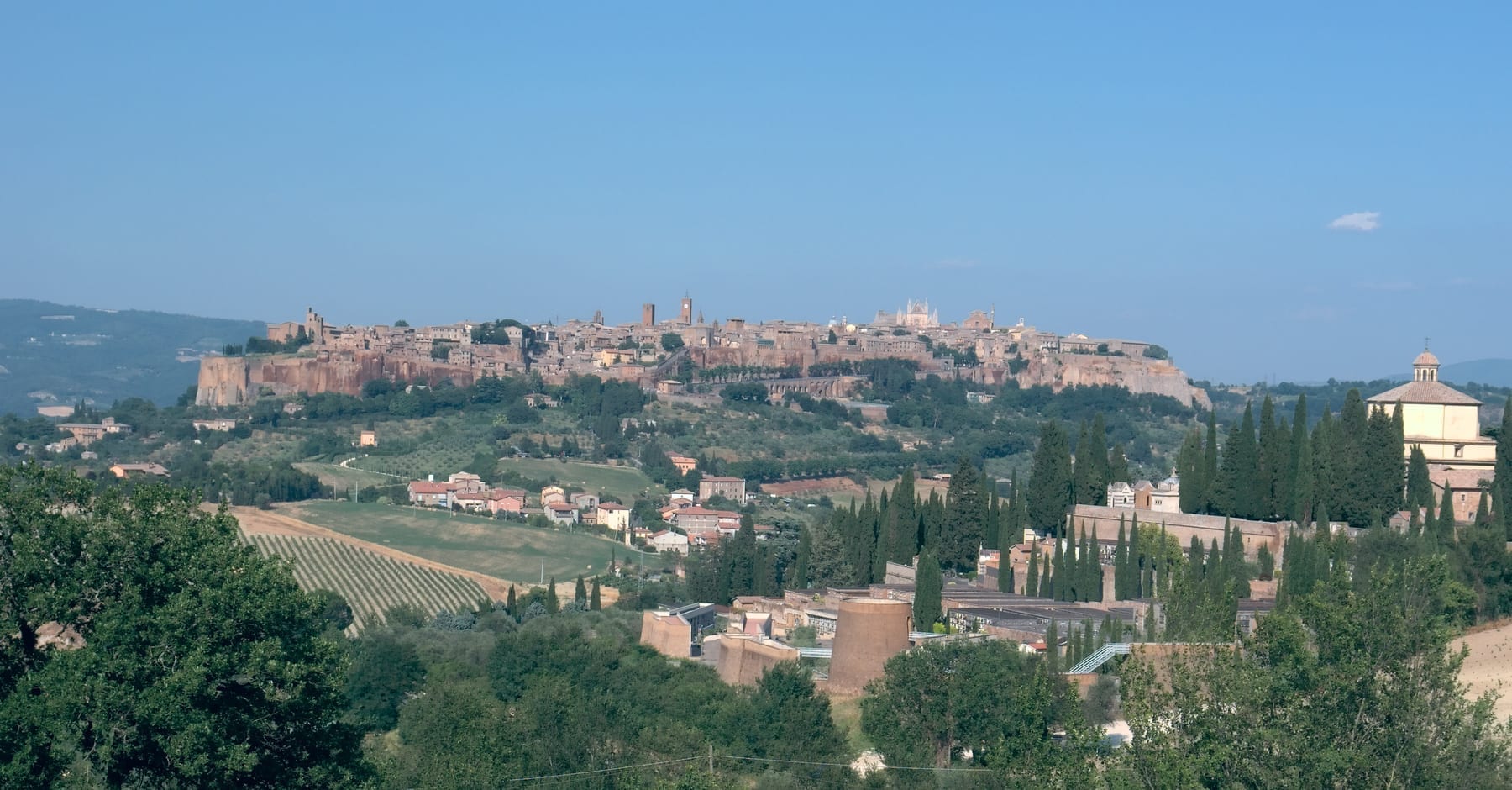
That is, essentially, the entire primary record. No surviving Etruscan text describes the ceremony. No wall full of nails has been excavated. The archaeology at Volsinii — most likely the site of modern Orvieto in central Italy, though the identification is debated — has produced temples and terracotta fragments, but no direct physical evidence of the nail ritual.
Yet the practice clearly made an impression on Rome. The Romans adopted their own version: a nail driven annually into the wall of the Temple of Capitoline Jupiter, near a statue of Minerva. Livy describes this Roman clavus annalis as derived from the Etruscan original. The highest-ranking magistrate performed the act on the Ides of September, and the cumulative nails served as a calendar in an era before written records were widespread.
Cicero, writing to his friend Atticus a generation later, refers casually to the custom of moving "the nail of the year" — clavum anni movebis — as though it were still common knowledge among educated Romans, even after the practice itself had faded.
What the nail meant
On the surface, the clavus annalis was a tally — a counting device in iron. But the ancient sources suggest it carried a deeper significance.
Nortia was a goddess of fate, chance, and destiny — equated by Roman writers with Fortuna, by Greek writers with Tyche. Driving the nail was not merely recording that a year had passed. The ritual appears to have involved "nailing down" the fate of the community for the year ahead: fixing what was uncertain, binding the future into something solid and irreversible.
The Roman poet Horace captured a related image when he described Necessitas — Necessity personified — carrying iron nails and wedges, tools for fastening things that cannot be unfastened. The nail, in this symbolic language, is finality. Once driven, it does not come out.
The Athrpa mirror. An Etruscan bronze mirror, now in a museum collection, depicts the goddess Athrpa — the Etruscan counterpart of Atropos, the Greek Fate who cuts the thread of life — holding a hammer in her right hand and a nail in her left. She stands over Meleager, the mythological hero fated to die after a boar hunt. One scholar described the hammer poised above the nail as representing "the inexorability of human fate."
Volsinii
The city where Nortia was venerated — Volsinii, or Velzna in the Etruscan language — was one of the twelve major city-states of the Etruscan league and likely a seat of its annual assembly. It stood on a volcanic plateau in central Italy, at what is now Orvieto, until the Romans destroyed it in 264 BCE and refounded the city at nearby Bolsena.
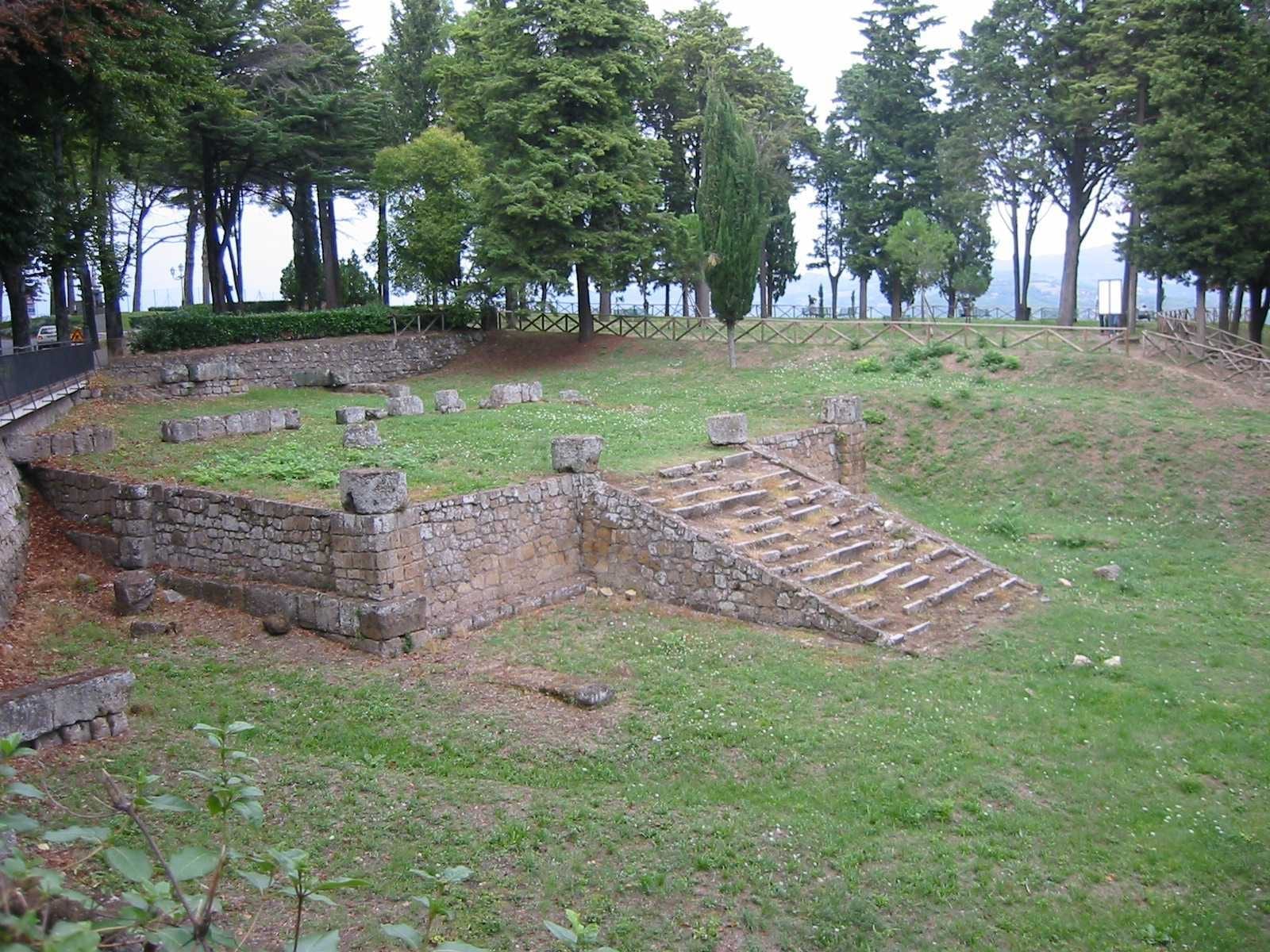
At Bolsena, a ruin outside the Florence gate is known locally as the Tempio di Norzia. But as the 19th-century traveller George Dennis noted, there is no evidence beyond the cult's existence to connect this structure to Nortia, and the visible architecture is Roman in date, not Etruscan.
The 4th-century consul Avienius, himself a native of Volsinii, left a devotional inscription addressing Nortia directly — a personal testament from someone who grew up in the goddess's city and still venerated her centuries after the nail ritual had ceased.
A nail, a gnomon, and a wall
The Etruscans would not have seen a connection between Nortia's nail and a sundial. The nail marked years; a gnomon marks hours. The nail was driven into the wall; the gnomon is mounted on it.
But the underlying gesture is the same: fixing a physical object to a wall so that the passage of time becomes visible and permanent.
When this site needed a name, the ritual was already in mind. A wall sundial is, at its most fundamental level, an act of marking time on a vertical surface — and Nortia was the first deity associated with exactly that practice. The name felt less like a choice than a recognition.
More articles in this section will explore what survives of Nortia's cult, her relationship to other fate goddesses across the ancient Mediterranean, and the broader Etruscan practice of divination and time-reckoning.